
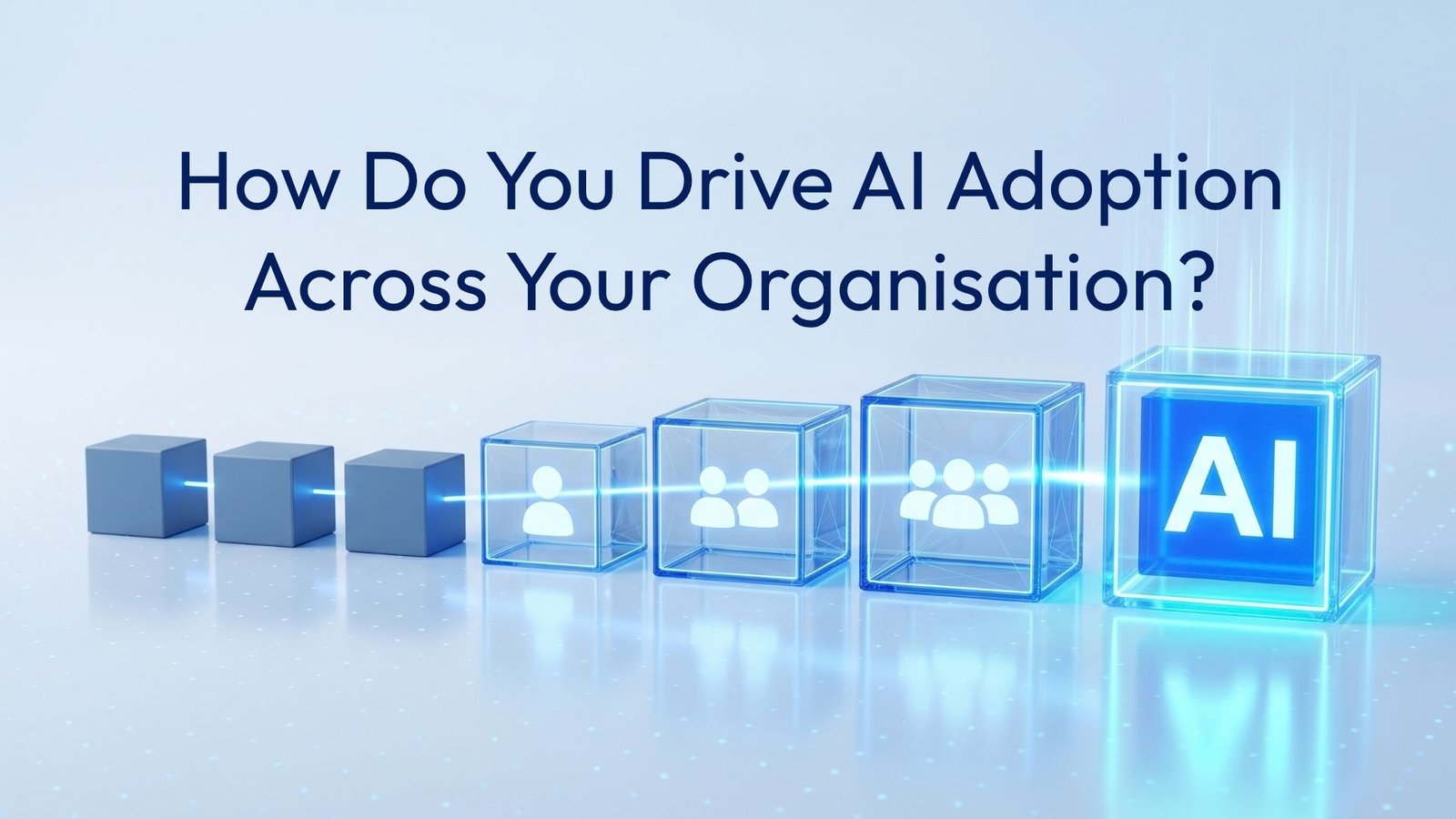
Quick answer: AI adoption is the point where people use AI in their everyday work, not just have access to it. Organisations drive it by starting with real problems, making early wins visible, training people for their specific role, building a champions network and setting clear guardrails, so staff use AI with confidence rather than avoiding it.
Key takeaways
- AI adoption is a people challenge first: trust, habit and visible value.
- Most roll-outs stall in the gap between “available to everyone” and “used by anyone”.
- Five things move it: real problems, visible wins, role-specific enablement, champions, and guardrails people understand.
You can buy the licences, run the pilot and switch on the tools, and still find that very little changes. That is the quiet truth about AI adoption: the technology is rarely the hard part. Getting real people, with real workloads and real doubts, to change how they work every day is far harder.
We see capable organisations stall at exactly this point. The AI works, yet adoption was treated as a launch rather than a journey. Consequently, licences sit unused behind a login nobody opens.
Driving AI adoption is a people challenge first and a technology challenge second. It rests on trust, habit and visible value. When those three line up, adoption spreads on its own.
Most organisations have now run a successful AI pilot. A small, enthusiastic group tried Microsoft 365 Copilot, liked it and reported real time savings. Then the wider rollout landed with a thud.
The reason is rarely the tool. Instead, the wider workforce received access without context. Nobody showed them what the tool was for, how it fitted their role, or why it was safe to rely on.
Faced with uncertainty and a full inbox, most people simply carried on as before. In other words, AI adoption is lost in the gap between “available to everyone” and “used by anyone”. Pilot groups are also usually volunteers, so their enthusiasm rarely predicts how everyone else will respond.
In our framework, adoption is the heart of the Walk stage, which we call Secure AI Adoption. This is where AI moves out of the pilot and into everyday workflows. Here, people build trust in the tools and an understanding of the rules that govern them.
That placement matters. Adoption is not something you bolt on after deployment; it is a stage in its own right and deserves the same planning as the technology. Organisations that treat Walk as a deliberate phase, rather than an automatic result of buying licences, are the ones whose AI actually gets used.
Working within the Microsoft ecosystem helps, because adoption is designed into the tools rather than left to chance.
Additionally, Copilot works within the permissions people already have, which removes a common reason for hesitation. The point, however, is not the feature list. Adoption succeeds when AI shows up inside familiar work, not alongside it.
Across the organisations we work with, the same five things move the needle.
Start with a real problem, not a demo. People adopt AI when it removes a genuine irritation in their day. Begin where the pain is obvious, such as meeting follow-ups, first drafts or finding information spread across systems.
Make the value visible. Share early wins in people’s own words. A colleague saying “this saved me an afternoon” lands harder than any slide deck.
Invest in role-specific enablement. Short, practical sessions beat a generic webinar. Someone in finance needs different examples from someone in HR or operations.
Build a champions network. Peers who use AI well and help others are more persuasive than any central announcement. Furthermore, they surface real questions early, before frustration sets in.
Give permission and guardrails together. When staff understand what they can and cannot do with AI, they use it with confidence rather than avoiding it out of fear.
Do these consistently, and adoption stops being something you push. Instead, it becomes something people pull towards, because they can see what it does for them.
The drivers are universal, yet the context shapes how you apply them.
In healthcare, trust and time are both in short supply. Clinical and corporate staff need confidence that AI is accurate and governed before they rely on it. A practical starting point is corporate services, such as HR, finance and estates teams within a trust, where people see the benefit quickly and can share it with clinical colleagues.
In the public sector, adoption has to account for scale and scrutiny. Large, varied workforce need role-specific enablement, and staff need to know their AI use meets transparency expectations. The AI Playbook for the UK Government gives teams a useful shared reference, while visible leadership support matters enormously.
For non-profit organisations, stretched teams are both the challenge and the opportunity. People have little time to learn new tools, yet they have the most to gain from time saved. Keep adoption simple, practical and tied directly to the mission, and it spreads quickly.
When organisations drive AI adoption deliberately, the returns compound. Productivity gains become real rather than theoretical, because people use the tools rather than simply holding licences. Moreover, the organisation builds AI confidence as a capability, which makes every future rollout faster.
Instead of a graveyard of pilots, you develop a workforce that expects AI to help and knows how to use it responsibly. That is the difference between an organisation that has bought AI and one that has genuinely adopted it.
No organisation reaches the Run and Win stages without first winning the Walk stage. Get people using AI with trust and understanding, and scaling becomes a matter of extending something that already works. Skip it, and you are forever restarting pilots that never quite take hold.
AI adoption is the point where people use AI as part of their everyday work, rather than simply having access to it. It covers the training, communication, guardrails and support that turn a technology rollout into a lasting change in how people work.
Pilots usually involve enthusiastic volunteers, while the wider workforce receives access without context. Without role-specific examples, visible wins and clear guardrails, most people carry on as before. Treating adoption as a planned stage, not a launch, closes that gap.
Start with usage: how many people use AI tools, how often, and in which teams. For Microsoft 365 Copilot, the Copilot Dashboard reports this directly. Pair those figures with staff feedback on time saved and tasks improved, so you see both uptake and value.
Adoption works best with a visible senior sponsor, a central team that coordinates enablement, and champions inside each department. Sharing ownership this way keeps momentum without relying on one team to change everyone’s habits.
AI adoption is the core of Walk, the Secure AI Adoption stage. Organisations agree strategy and governance foundations at Stand, then bring AI into everyday workflows at Walk. That adoption is what allows Run and Win to scale AI across the organisation.
At Mazik Global UK, we help organisations unlock the full potential of Microsoft technologies with AI-driven innovation and data-led strategies. Speak to our team to find out how to drive AI adoption in your organisation.
These are exactly the questions we will explore at the Mazik AI Summit 2026 on 4 November in London, including our Business Track on Achieving AI Impact. Register your place
How Do You Drive AI Adoption Across Your Organisation? Quick answer: AI adoption is the point where people use AI…

Quick answer: AI governance is the set of controls over data, access, compliance and monitoring that lets an organisation use…
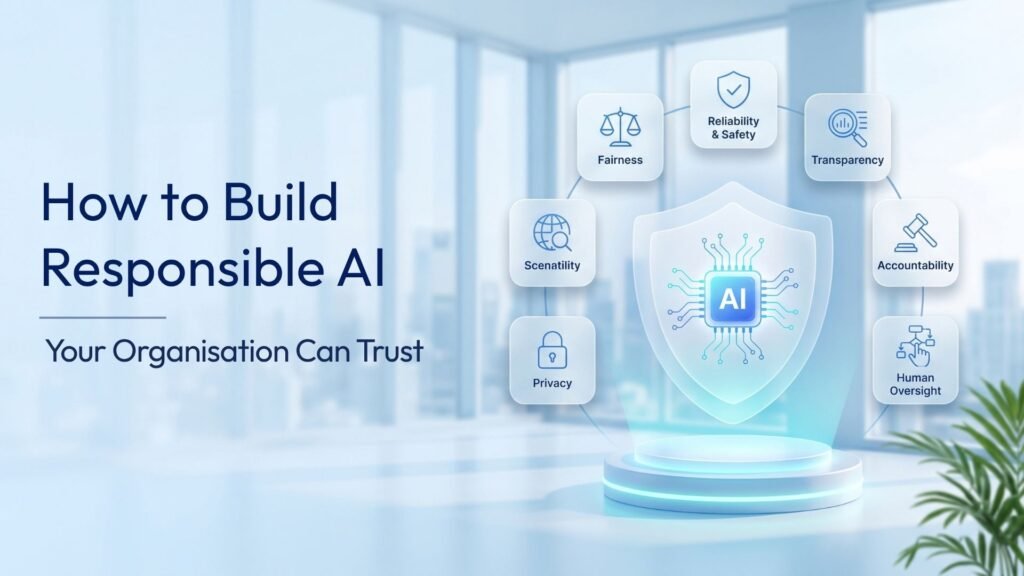
Most organisations no longer ask whether AI belongs in their business. They ask how to build responsible AI that leadership,…
In a world that moves faster every day, you need to be constantly evolving. Chat with a technology expert today to learn how we can help you operate efficiently, solve business challenges, and innovate effectively.
Mazik Global UK, a trusted Microsoft Solution Partner and FastTrack-recognised expert, delivers AI-powered, low-code solutions across Dynamics 365, Power Platform, and Azure, driving confident digital transformation.